
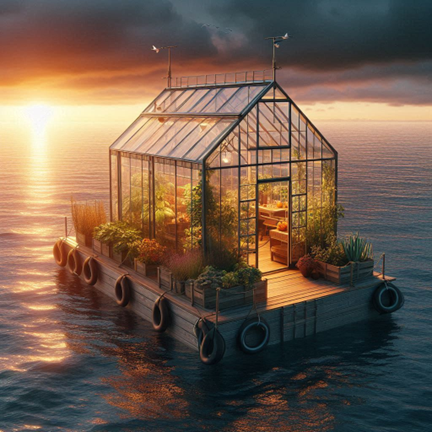
— Pumps air or oxygen-rich water to deep layers while growing crops above. Fully automated, centrally controlled and covered by two patent applications. The FrykenPontoon™ floatingGreenhouse Solution integrates oxygenation technology into controlled environments. This section describes the hardware component. Learn more about the software anchor in the FrykenPontoon™ AI-system. The patent drawings are located at the bottom of the document, and our vision and background on the About page.

ABSTRACT
This invention presents a system for sustainable resource management, by using an autonomous fleet of floating platforms for cultivation and water oxygenation, and comprising a network of specialized, mobile platforms, equipped for either or both functions, and monitored and controlled by a central Command Center. These platforms can be deployed globally in oceans, lakes, and rivers, cultivating diverse crops year-round for worldwide delivery. Additionally, they can be strategically positioned in oxygen-depleted zones to revitalize ecosystems and support marine life. The invention also aims to enhance maritime logistics and facilitate the electrification of the world’s ships. By establishing Floating Storage and Transshipment Centers near shipping routes and facilitate the replenishment of power, and the efficient transfer of goods between platforms, cargo ships, and land-based ports.


TITLE OF THE INVENTION:
Autonomous Floating System for Sustainable Cultivation of Organic Matter and Targeted Oxygenation of Aquatic Environments
TECHNICAL FIELD:
The present invention pertains in the field of sustainable agriculture, environmental remediation and marine technology. More specifically, it relates to the design, deployment, and operation of mobile, autonomous floating platforms equipped for the cultivation of organic matter and targeted oxygenation of aquatic environments. These platforms are designed to operate in diverse aquatic environments, including oceans, lakes and rivers. They are remotely monitored and controlled, utilizing real-time data and optimization algorithms to maximize productivity and address ecological challenges such as oxygen depletion and eutrophication.
BAKGROUND OF THE INVENTION:
The global demand for food and other organic products continues to escalate, driven by factors such as population growth, changing dietary preferences, climate change-induced disruptions to traditional agriculture, and the loss of arable land due to urbanization, soil degradation, flooding and desertification. Conventional agriculture is struggling to keep pace with this demand, facing limitations in land availability, dependence on environmentally harmful pesticides and fertilizers, and the significant carbon footprint associated with long-distance transportation of produce.
Simultaneously, warmer climates and the escalating pollution of waterways from agricultural runoff, industrial waste, and sewage discharge has led to increased prevalence of algae and a widespread decline in dissolved oxygen levels in aquatic ecosystems. This phenomenon, known as hypoxia or oxygen depletion, has devastating consequences for marine biodiversity, leading to the formation of dead zones where most marine life cannot survive. The resulting loss of fish stocks and other aquatic resources have severe economic and social impacts on communities that rely on these ecosystems for their livelihoods.
Existing methods for water oxygenation are often localized and limited in scope, such as aeration systems in ponds for livestock. Recent research, notably in Norway, has demonstrated the effectiveness of pumping air directly to the seabed to oxygenate seawater, potentially revitalizing dead zones and restoring habitats for marine life. However, the scalability and logistical challenges of implementing such solutions on a larger scale remain significant. The invention’s autonomous nature, facilitated by remote monitoring and control systems, ensures efficient operation and adaptability to changing environmental conditions. By utilizing real-time data and optimization algorithms, the platforms can dynamically adjust their location and operational parameters to maximize crop yields and oxygenation efficiency. This innovative approach has the potential to revolutionize both agriculture and environmental conservation, contributing to a more sustainable and resilient future.
PRIOR ART:
The field of agriculture has seen significant advancements in automated greenhouse cultivation. Numerous prior art systems exist for regulating environmental factors such as temperature, irrigation, light intensity, and CO2 concentration within stationary greenhouses. Some systems offer fully automated operations, managing the entire cultivation process from planting to harvest. Technologies for monitoring plant maturity and calculating optimal harvest times are well-established, as are various automated harvesting solutions. Automatic systems have also been developed for use in space.
Optical systems employing data processing techniques are increasingly utilized to assess plant health and maturity across different species. Additionally, manipulating plant growth cycles to achieve yearround yields through light and temperature adjustments is becoming more widespread. However, the high energy costs associated with greenhouse cultivation, particularly electricity consumption which can exceed 50% of the operating cost, pose a significant challenge to profitability. Despite these challenges, greenhouse cultivation is favored for its ability to provide higher yields and superior product quality compared to open-field cultivation, due to optimized growing conditions and greater protection from environmental stressors.
Post-harvest processes such as cleaning, sorting, drying, heating, freezing, and packaging are also automated in many cases. While floating greenhouses anchored to quays and supplied with electricity from land have been implemented, these are typically small-scale and primarily for niche applications. Similarly, barges or houseboats with rooftop or wall gardens exist, often incorporating livestock like goats, chickens, and ducks. Large cruise ships may feature onboard plant oases for passenger comfort. Specialized floating greenhouses with containers allowing plant roots to contact water surfaces for irrigation have also been developed.
Logistics and supply chain management for goods, including transport via sea routes, often rely on synchronization and coordination. Autonomous or remotely operated ships and vessels are well-known, utilizing GPS positioning and satellite communication for navigation and data transmission. Land-based Command Centers commonly monitor and interact with these autonomous vessels, employing sensors and computer programs to ensure safe passage and obstacle avoidance. Remote monitoring and control 30 systems for various machines, equipment, and processes are widespread, with applications in law enforcement, transportation, and maritime industries. In addition, of course, all devices with computer programs with control of certain functions have access to sensors of various kinds monitored by the program and which can, for example, activate one or more functions on the device, store information or transmit the information.
Numerous patents exist for computer-based methods and systems for order placement. For instance, US8341036B2 describes a method and system for ordering items over the Internet, while US7497369B2 relates to electronic marketplaces for online buying and selling.
Experimental efforts caried out in Norway by NIVA (Norwegian Institute for Water Research), to 5 improve the oxygen content in the bottom water, have demonstrated the potential of oxygenating the water using air pumps to deliver oxygen-rich air through hoses. And researchers at the University of Gothenburg have tried a method of pumping oxygen-rich surface water down to the seabed, also with good results. Satellite data on water temperature and algal blooms are currently collected by NASA and the EU’s Copernicus observation system.
The invention is intended to make it possible to use existing research results and technologies on a larger scale on a fleet of floating and movable platforms and seeks to address the limitations of prior art by a system for sustainable resource management. And enabling efficient order fulfillment, coordinated crop cultivation on optimized units, and year-round cultivation in previously unsuitable locations. It aims to reduce the need for imports, free up arable land for alternative uses and improve the maritime environments.
SUMMARY OF THE INVENTION AND ALTERNATIV EMBODIMENTS:
The present invention is a system for sustainable resource management and addresses the challenges by creating a system for optimal utilization of autonomous floating platforms for both sustainable food production and targeted environmental remediation. By utilizing previously untapped areas like open water bodies for cultivation, it minimizes the need for pesticides, reduces transportation-related emissions, and promotes sustainable practices. The integration of water oxygenation capabilities allows for targeted interventions in oxygen-depleted zones, fostering healthier aquatic ecosystems and supporting biodiversity.
The invention’s autonomous nature, facilitated by remote monitoring and control systems, ensures efficient operation and adaptability to changing environmental conditions. By utilizing real-time data and optimization algorithms, the platforms can dynamically adjust their location and operational parameters to maximize crop yields and oxygenation efficiency. The inventions allow for a variety of operational models. For example, some platforms may be dedicated solely to oxygenation, or solely to cultivation while others may combine oxygenation with crop cultivation. The Command Center can dynamically adjust the allocation of platforms between these functions based on real-time data and evolving environmental needs. By integrating advanced technologies, data-driven decision-making, and a collaborative approach, the invention offers a scalable and adaptable solution for addressing critical challenges in food production and environmental conservation. It has the potential to revolutionize how we cultivate food and protect our planet’s precious aquatic ecosystems.
The invention encompasses a network of floating, mobile, and automated cultivation platforms, each equipped with a unique identifier for communication and tracking and with computational and positioning capabilities (e.g., GPS) for autonomous navigation and operation. These platforms can be a floating device of any size, shape or material that corresponds to the requirements for intended tasks and that is equipped in the manner described here and strategically deployed across oceans, lakes, and rivers, forming a decentralized yet interconnected cultivation infrastructure.
Where possible, this invention uses already known technical solutions from land-based cultivation, wireless monitoring and influence on various organs, technical solutions on automatically steered ships at sea and all equipment included in them. Such as GPS positioning and sensor-based obstacle avoidance, and computer-controlled propulsion and steering system and are therefore not described in detail. A fleet of these floating apparatuses can be deployed across oceans, lakes, and rivers. They are interconnected and managed by a central control center, which acts as Command Central and coordinates operations, monitors environmental conditions, and optimizes cultivation parameters.
Key Features and Innovations:
- Floating Cultivation Platforms: Automated, mobile platforms for cultivating organic matter on bodies of water (oceans, lakes, rivers) and or add oxygen to the water from the unit.
- Remote Command Center: A centralized system for monitoring and controlling multiple cultivation platforms, managing logistics, receiving orders, and optimizing cultivation based on stored information and instructions in a computer unit and incoming data.
- Minimized Pesticide Use: Cultivation in isolated environments reduces the need for pesticides
and herbicides. - Year-Round Cultivation: Climate control and mobility allow for year-round cultivation, even of crops typically associated with specific regions or seasons. And by crop means the cultivation of all forms of organic matter.
- Monitoring of water quality; And use the collected data for a digital map showing areas with low oxygen content and determine areas of urgent need.
- Water Oxygenation: Integration of systems to oxygenate water beneath the platforms, potentially addressing environmental concerns like “bottom death.”
- Automated Management: Automated systems for planting, harvesting, nutrient delivery, and environmental control.
- Energy Self-Sufficiency: Utilization of solar, wind, and wave energy to power the platforms and potentially serve as charging stations for other vessels.
- Optimized Logistics: Coordination of transportation and delivery to streamline the supply chain and reduce land-based transport.
Floating Storage and Transshipments Center: Strategically located hubs for transshipment of goods between cultivation platforms and land-based ports, also serving as charging stations for other vessels. - Diverse Applications: Potential for use beyond crop cultivation, including manufacturing, research, and even residential spaces.
Additional Considerations: - Environmental Impact: Emphasis on reducing the environmental impact of agriculture by freeing up land, minimizing pesticide use, and potentially combating water oxygen depletion.
- Economic model: Potential for a new economic model based on contract agriculture to wholesale or direct sales to consumers, as well as energy production and sale of electricity, as well as supply of oxygen to oxygen-deprived water areas for a fee.
- Regulatory Framework: Need for a clear regulatory framework addressing insurance, liability, and compliance with agricultural and maritime laws.
Some key steps and features of how the invention works and is designed in at least one embodiment:
- Order Placement: Customer places an order, for a specific crop and amount or supply of oxygen at a specific location, at the Command Center.
- Platform Selection: Command Center selects the most suitable cultivation platform based on equipment, availability, capacity, crop type and amount, maturity, location, and weather forecast.
- Cultivation: The selected platform automatically manages cultivation conditions (temperature, humidity, light, nutrients) using sensors and feedback loops.
- Water Oxygenation: The platform’s oxygenation system enriches the water beneath the platform in the desired location or area with the contracted capacity of one or more air pumps and or fluid pumps and activated during the agreed period.
- Monitoring: The platform continuously monitors crop growth and environmental conditions, and the oxygenation of water and transmitting data to the Command Center.
- Harvesting: When the crop is ready, the platform either harvests it automatically or moves to a designated location for harvesting.
- Delivery: The harvested crop is transported to the customer, either directly from the platform or through a floating freight center.
- Replanting/Relocation: The platform is prepared for the next cultivation cycle, potentially relocating to a new location based on the Command Center ‘s analysis. The present invention discloses a floating, mobile, and automated cultivation platform for growing organic matter and or oxygenating water. In at least one embodiment, the platform includes:
- A floating structure adapted for placement on a body of water.
One or more growing containers and refer to all forms, sizes and spaces intended for the cultivation of all forms of organic material and can be specially adapted for optimal well-being and growth in, for example soil, sand or water. For example, cultivation chambers, boxes, floors, room or any other equipment or method for growing organic matter is here called containers. - An automated control system for regulating cultivation conditions (e.g., temperature, humidity, light, nutrients) using technologies similar to those used in advanced land-based greenhouses.
- A sensor system for monitoring cultivation parameters (e.g., plant growth, soil moisture) and environmental conditions (e.g., water temperature, oxygen levels) and includes cameras.
- A communication unit for transmitting data to and receiving instructions from a remote- Command Center.
- An oxygenation system, such as an air pump that sucks air that is passed on with a hose or pipe, for enriching the water beneath the platform with oxygen, and or a fluid pump that first sucks oxygen-rich surface water and then pumps the water to the desired depth via a hose or pipe.
- A propulsion system, such as a motorized propeller and rudder, for moving the platform to optimal locations using GPS and nautical charts for navigation and radar and sonar to avoid obstacles.
The invention also encompasses a method for cultivating organic matter using the floating platform, as well as a system for managing multiple platforms from a central Command Center.
In at least one embodiment, the invention also encompasses a method for cultivating organic matter using the floating platform, comprising: - Positioning the platform at the desired location on a body of water with GPS.
- Collecting orders from customers.
- Collecting data on oxygen levels in different geographical locations.
- Planting organic matter within the container(s).
- Automatically controlling cultivation conditions using the onboard control system.
- Monitoring cultivation and environmental parameters using the sensor system.
- Transmitting data from the sensor system to a remote-Command Center for analysis and control.
- Oxygenating the water beneath the platform using the oxygenation system.
- Moving the platform to new locations as needed, based on data analysis and Command Center instructions.
Advantages of the Invention: - Reduced Environmental Impact: Minimizes land use, pesticide use, and transportation-related emissions. In addition, platforms placed in international waters can also be based in countries that do not try to kill off business with high taxes and fees.
- Increased Food Production: Enables cultivation in previously unused areas (bodies of water).
Energy Generation: Solar panels, wind turbines, or wave energy converters to generate power for the platform’s operations, where the power is stored in the battery. - Improved Water Quality: Integrates water oxygenation to combat issues like bottom death and support aquatic life by using collected data from particularly vulnerable areas.
- Enhanced Efficiency: Automated systems optimize cultivation conditions and resource use,
utilizing proven technologies from land-based greenhouses. - Year-Round Production: Climate and light control and mobility allow for continuous cultivation and harvesting.
- Flexible and Scalable: Platforms can be deployed and managed according to demand and environmental conditions.
The Command Center is the commander and serves as the central hub for orchestrating the entire operation. And facilitates communication and coordination between various stakeholders, including the water quality monitoring body, platform owners, customers, suppliers and the land-based and floating storage centers. Information exchange between the Command Center and the platforms is primarily conducted wirelessly, utilizing satellite communication or other suitable technologies.
Real-time data from each cultivation platform is transmitted to the Command Center, providing a comprehensive overview of the system’s status. This data encompasses operational parameters such as the functionality of various systems, progress of automated care routines, crop maturity levels, oxygen pump activity, the oxygen level in the water, supply needs, and precise geographical location (obtained through GPS or equivalent). This data is used to optimize the placement of platforms, allocate resources efficiently, and ensure the timely delivery of harvested crops.
The Command Center also gathers meteorological data from each platform, including wind speed, wave height, and temperature. By integrating this real-time data with weather forecasts, the Command Center can proactively assess potential risks and make informed decisions regarding platform relocation or
other necessary actions. For instance, if a storm is predicted to exceed the platform’s design thresholds for wind or wave height, the Command Center can instruct the platform to move to a safer location. In addition to managing cultivation and oxygenation operations, the Command Center also handles customer orders, payment processing, and insurance arrangements. and leverages advanced algorithms and AI to analyze data, predict demand, and optimize the overall system for maximum efficiency and 30 profitability.
The Command Center orchestrates the operation of this network, handling tasks such as:- Co-ordinator: Negotiates with the organization that monitors water quality, owners of platforms, customers and suppliers of goods and supplies to and from each unit.
Order management: Receives, processes, and prioritizes customer orders for various crops and locations requiring water oxygenation, ensuring efficient allocation of resources and timely delivery. - Logistics coordination: Optimizes platform placement based on crop-specific requirements, environmental conditions, and delivery destinations.
- Monitoring and control: Collects real-time data from platform sensors, analyzes performance, and remotely adjusts operational parameters as needed.
- Platform preparation and deployment: Upon receiving an order, identifies suitable cultivation platforms equipped for the specific crop, provisions them with necessary supplies for self- sufficiency, and determines optimal placement for cultivation considering distance, weather forecasts, and avoidance of busy shipping lanes or restricted areas.
- Data analysis and decision-making: Leverages advanced algorithms and artificial intelligence (e.g., ChatGPT or Gemini) to process data from platforms, enabling automated decision-making regarding cultivation locations, resource allocation, harvesting schedules, delivery routes, and proactive adjustments based on weather patterns and environmental factors.
Summary of the invention in at least one embodiment:
The Command Center contracts a number of owner of platforms that are approved for the task they are to perform, which may include units that can both grow on the unit and supply oxygen to the water underneath the unit, and also units that specialize in one of these tasks. Furthermore, an organization is included that here is called an Environmental monitoring entity Authority and that has the task of monitoring the water quality of the world’s watercourses and taking samples of, for example, the oxygen level at different depths in the sea and storing taken samples with coordinates in a searchable computer program. Then the organization contacts the Command Center and informs them where there is the greatest need for oxygenation in the water and under given agreements on compensation for various specific assignments regarding, for example, the amount of oxygen supplied and during what period of time this is to be carried out, etc.
Furthermore, the Command Center is contacted by customers who wish to buy different types and quantities of crops and when they want delivery and where it should be delivered. The Command Center then analyzes collected data from the said organization for oxygenation of water and the customers who wish to buy crops with stored data on each individual cultivation platform regarding, for example, capacity for each crop and geographical work area.
When the organization for oxygenation of water wants oxygenation in a specific area, the Command Center can of course choose between units that have spare capacity and that specialize in oxygenation or also have equipment for cultivation on the unit. Then, the Command Center contacts the owners of platforms that are best equipped and geographically located to perform the agreed tasks. Then the selected units are equipped with the necessary supplies for the task, such as a system for supplying air to the water and or containers placed on the platform being provided with soil and planted with the desired crop by hand or automatically. The platform is then transported to the location requested by the Command Centre and performs the agreed work during the agreed time. When the assignment is completed and any cultivated goods have been delivered, the platform is available for new assignments.
And in one embodiment the containers can also be planted with crops on land and placed on the unit in the same way as used in modern automatically controlled greenhouses. Where the crop is then treated in an optimal way throughout the growing season. Furthermore, the platform is transported to the agreed place at sea, and if nothing unforeseen occurs, the unit can be anchored at this place until it is time to
harvest the crop, where the unit can be made to automatically lift the anchor and move to the place where the crop can be harvested. The unit can of course be equipped with equipment to harvest the crop itself or that sowing/planting and harvesting are taken care of by staff.
Key Innovations and Features in at least one embodiment:
- Networked Autonomous Platforms: A fleet of interconnected, self-navigating platforms equipped with onboard computational capabilities, GPS for precise positioning, and a suite of sensors for environmental monitoring. These platforms are designed to be modular and scalable, allowing for the creation of networks of varying sizes and configurations to suit specific needs and environments.
- Centralized Command Center: A sophisticated Command Center that serves as the “brain” of the operation, orchestrating the entire network. The Command Center receives real-time data
from each platform, including information about location, environmental conditions, crop health, and oxygenation status. And utilizes this data to make informed decisions regarding platform placement, resource allocation, harvesting schedules, and oxygenation efforts. The Command Center also communicates with external stakeholders, such as customers, suppliers, and regulatory agencies, to ensure smooth operation and compliance with relevant regulations. - Modular Cultivation Systems: Customizable systems to accommodate a diverse range of crops, utilizing soil-based, hydroponic, or aquaponic methods. These systems are equipped with advanced sensors and automation to monitor and control key environmental parameters such as temperature, humidity, light intensity, CO2 levels, nutrient concentrations, and pH. This allows for precise optimization of growing conditions for each crop, maximizing yield and quality while minimizing resource consumption. And the systems described here are called “container”.
- Environmental monitoring entity: An organization with responsibility for monitoring water quality and which decides where there is a need to add oxygen to the water and, with advantage, funded by an international environmental agency. Orders assignments from the Command Center.
- Adaptive Oxygenation Systems: A suite of oxygenation mechanisms designed to efficiently deliver oxygen to targeted depths in the water column. These mechanisms include:
o Electrically Driven Air Pumps: These pumps draw in atmospheric air, compress it, and deliver it through pips or hoses to diffusers located beneath the platform. The diffusers release the air in the form of fine bubbles, increasing the dissolved oxygen concentration in the surrounding water.
o Hose Deployment/Retraction Systems: Motorized drums or other mechanisms are used to deploy and retract the hoses, allowing for precise control over the depth and location of oxygen delivery.
o Onboard Oxygen Saturation: Closed containers on the platform can be used to mix water with air, creating oxygen-saturated water, according to the method and technique tested by the University of Gothenburg. But where additional oxygen is added to the water by whisking/mixing water and air and increase the number of gas molecules bonded to water molecules. But normally, the surface water should be sufficiently oxygenated to be pumped directly down to the desired depth. However, for temperature-sensitive species, cooling of the water may be required or taken from a colder depth. - Renewable Energy Integration: The platforms are designed to be energy self-sufficient, utilizing solar panels, wind turbines, or wave energy converters to power their onboard systems. This reduces the reliance on fossil fuels and minimizes the environmental impact of the operation. In some embodiments, the platforms may even generate surplus energy, which can be stored in batteries and sold to ships, floating Storage Center or at the quayside.
- Data-Driven Optimization: The invention leverages real-time data and machine learning algorithms to continuously optimize various aspects of the operation. This includes dynamic adjustment of platform placement based on weather patterns, water conditions, and crop growth data; optimization of cultivation parameters such as irrigation and nutrient delivery based on
sensor readings; and targeted oxygenation efforts based on real-time monitoring of dissolved oxygen levels performed by specific equipment and capacity. - Environmental Monitoring: The platforms are equipped with a comprehensive suite of sensors to monitor a wide range of environmental parameters, including water temperature, salinity, pH, dissolved oxygen, turbidity, nutrient levels, and the presence of harmful algal blooms. This data is transmitted to the Command Center, and the data is analyzed to assess the health of the ecosystem and identify areas that require intervention.
- Collaborative Framework: The invention fosters a collaborative framework between the Command Center, platform owners, environmental monitoring agencies/organization, customers and floating Storage and Transshipment Centers and land-based distributors.
The platforms are equipped with advanced systems for crop cultivation and or water oxygenation:
- Cultivation systems: Modular and customizable to accommodate different crops, including soilbased, hydroponic, and aquaponic systems. Equipped with sensors to monitor and control environmental factors like temperature, humidity, light, and nutrient levels.
- Oxygenation systems: Utilize electrically driven air pumps, tubes or hoses, and diffusers to deliver oxygen to specific depths. Hoses can be designed for compact storage (e.g., flat-pack configuration) and deployed/retracted using motorized drums. Anchor-like mechanisms or weights may be employed for hose positioning.
- Onboard oxygen saturation: Closed containers for mixing water with air/oxygen and preferably under high pressure, potentially using mechanical agitation, followed by delivery of oxygenated water to desired depths using fluid pumps. The gas can consist of air or the desired gas mixture and can also be cooled by the said container being connected to a cooling system.
Embodiments of the Invention:
- Insurance: Methods for insuring cultivation platforms, crops, and other associated units, including guarantees for delivery, quality, and damage.
- Cultivation: Growing biological products on movable cultivation platforms, including transport, wrapping/treatment, sale, processing, delivery, purchase, storage, and consumption of goods.
- Logistics: Delivering supplies to and displacing cultivation platforms, building and servicing platforms, operating a Command Center for monitoring.
- Positioning & Communication: Continuous determination of cultivation platform position via GPS or equivalent; real-time information transfer between platforms and the Command Center regarding location, status, and operational parameters.
- Automation: Data-driven monitoring and control of all movable functions on cultivation platforms; planting/sowing of organic matter on platforms; autonomous propulsion or towing capability.
- Water Management: Desalination of seawater or freshwater storage with consumption reduction through soil liquid recovery and reuse.
- Business Method: Utilizing cultivation platforms for growing crops and delivering ordered quantities to buyers and or deliver oxygen to the water under the unit in specific area, and to build and sell platforms and equipment for oxygenation and/or cultivation of crops.
- Resource Utilization: Retrieval, clarification, and cultivation in organic/inorganic material from lake bottoms after sterilization; establishment of exclusion zones for platform placement.
- Environmental Optimization: Maximizing solar radiation through reflective water surfaces and solar panels; monitoring and controlling multiple platforms from a central Command Center; fulfilling crop orders based on optimal platform location and weather forecasts; oxygenate water and improve biodiversity.
- Support & Security: Providing support from floating or flying vessels; equipping platforms with automated protection systems against theft.
- Energy: Achieving self-sufficiency through solar cells, wind turbines, or wave power.
- Automation (continued): Robotic arms for sowing, harvesting, and processing; onboard computers and software for controlling platform functions; central control for logistics and order
management. - Cultivation Platform: Floating, mobile apparatus for optimizing growing biological material on the device and or in the water below, and designed for placement and movement on water, outside the danger zone of plant enemies and competitors.
- Communication: Wireless transmission of status updates from platforms to Command Center,
enabling remote monitoring and adjustments. - Cultivation Process: Planting seeds/plants on a conveyor belt drawn into the platform, followed by automated harvesting, soil collection, and crop processing.
- Biosecurity: Killing organic life in leaking tanks through electric shock or disinfecting soil/water with microwaves or radiation.
- Crop Management: Monitoring and controlling cultivation conditions like irrigation, fertilization, and CO2 levels using sensors and automated systems.
- Order Fulfillment: Computer programs for displaying available crops, order placement, and delivery details.
- Optimal Placement: Calculating optimal locations for each platform based on profitability, time factors, weather forecasts, transport distances, crop-specific needs and ordered places that can be supplied with oxygen.
- Identification and Tracking: Each platform is assigned a unique identification code for easy communication and data access, and each platform is marked with a unique name, number, or code for visual identification from various angles and clearly visible from the air and from space.
21.Floating Storage and Transshipment Center: Strategically located at busy shipping lanes can serve as central hubs for warehousing and transshipping goods from and to platforms, cargo ships, and land-based ports. These centers could also be equipped with power generation facilities, such as wind, wave, solar, or even nuclear power plants, to provide charging services for electric vessels, further promoting sustainable maritime transportation. - Cultivation Container: This means any part of the floor, ceiling or wall surface of the platform designed for cultivation, for example in large cultivation boxes, like those used in automated greenhouses. And enable efficient planting, harvesting, and nutrient recycling within the platforms and can also be planted and harvested at the quay.
- Scientific Research Platforms: Can serve as platforms for scientific research, equipped with instruments to monitor marine life, collect environmental data, and conduct experiments.
- Pollination Mechanisms: Platforms incorporate various pollination mechanisms, including mechanical pollination, air circulation systems, and the introduction of natural pollinators like bees and bumblebees and harvesting of honey.
- Intermodal Transportation Hubs: Platforms that act as hubs for intermodal transportation, facilitating the movement of goods and people between land-based and sea-based locations.
- Diverse Crop Cultivation: The flexible design allows for cultivating a wide range of crops, adapting to specific environmental requirements and supporting diverse species.
- Fixed Buoys for Stability: Fixed buoys with anchoring mechanisms enhance platform stability in designated locations, allowing for autonomous connection and secure mooring.
- Interconnected Platform Clusters: Multiple platforms can be interconnected for enhanced
stability and logistical efficiency during transport or stationary operations. - Data Collection and Updates: The Command Center continuously updates records with information from each platform, including crop details, location, and customer orders, for optimized resource allocation and logistics.
- Autonomous Navigation: Platforms are equipped with autonomous navigation capabilities to
execute instructions from the Command Center for relocation or transport to designated collection points or ports.
Features of a Floating Transshipment Center. (also referred to here as a floating freight center).
- Docking Bays: Areas for cultivation platforms and other vessels to dock and transfer goods.
- Storage Facilities: Warehouses or containers for storing crops and other materials in optimal temperature and humidity.
• Cranes and Conveyors: Equipment for loading and unloading cargo.
• Communication and Control Systems: Like those on the cultivation platforms, for coordinating logistics and communicating with the Command Center and ships.
• Energy Generation: Solar panels, nuclear, wind or wave power and the energy stored in batteries
for self-sufficiency and potentially serving as a charging station and can facilitate the introduction of electrically powered ships.
Cultivation Platform Design
The autonomous floating cultivation platform is a modular structure designed for scalability,
adaptability, and seaworthiness. The platform’s hull is constructed from durable, marine-grade materials such as aluminum or steel, but can also be made of high-density polyethylene (HDPE) or reinforced concrete, ensuring longevity and resistance to corrosion. Ballast tanks can be incorporated to maintain stability in varying sea states, and the platform can be equipped with additional stabilization features like outriggers or anti-roll tanks. Propulsion is achieved through one or more electric motors driving propellers, with rudder control for steering. The motors are powered by onboard batteries, which are recharged using renewable energy sources such as solar panels, wind turbines, or wave energy converters. The platform’s navigation system utilizes GPS and other sensors for precise positioning and autonomous movement.
Cultivation Area
The cultivation area here called container is designed to maximize crop yield while minimizing resource consumption. It consists of in at least one embodiment of multiple levels or floors, each containing crop beds, irrigation systems, and sensor arrays. The number of floors and the height of each floor can be customized based on the specific crops being cultivated and the available space on the platform. And ceilings and walls can be partially transparent as in land-based facilities and manufactured in a design and materials that can withstand the environment in which it is to be placed. And the design, data program, equipment and cultivation process can consist of correspondingly well-tested technology used in modern automated greenhouses on land, or proposed automated solutions to be used in space or on the Moon and Mars.
Oxygenation System
The oxygenation system is designed to deliver oxygen to oxygen-depleted zones in the surrounding water. It consists in at least one embodiment of:
- Air pumps: One or more electrically driven pumps that draw in atmospheric air and compress it. The more powerful the pump, the more air can be pressurized per unit of time, and the optimal size is determined by the unit’s ability to generate power, the number and type of selected pipes or hoses. And if diffusers are used, also its performance and number.
- Hoses: Flexible hoses that transport the compressed air from the pumps to the diffusers or one or more holes on the hose placed at the desired depth for oxygen supply. The hoses can be made of durable materials like reinforced PVC or silicone to withstand the marine environment.
• Pipes: Transports the air from the pump to the desired depth determined by the length of the pipe and the angle to the water surface, i.e. if it is placed straight down 90 degrees. Can also be designed in telescope design for less bulky transport and can be made of any durable material. - Diffusers: Devices that release the compressed air into the water in the form of fine bubbles. The diffusers can be designed to create different bubble sizes and distribution patterns, depending on the specific oxygenation requirements.
- Air cooler and air conditioning (AC): If, for example, a coral reef suffers from both oxygen deprivation and heating, the air in the pump’s air intake can be cooled to the desired temperature.
- Water tank with oxygen supply: And vigorous stirring in the container where the water is then pressed down to the desired depth with the help of a fluid pump using said hoses and pipes.
The oxygenation system can be operated in several modes: - Continuous operation: The air pumps run continuously, providing a constant supply of oxygen to the water.
- Intermittent operation: The air pumps are activated at specific intervals, based on real-time data from oxygen sensors or other environmental factors.
- Targeted operation: The air is directed to specific areas of the water column where oxygen levels are lowest by adjusting the length of the hose or pipes to the desired depth.
Command Center:
The Command Center is the central nervous system of the entire operation. It is in at least one embodiment a land-based facility equipped with powerful computing resources, data storage, and communication systems. The Command Center ‘s primary functions include: - Data collection and analysis: Receiving and processing real-time data from the platforms’ sensors, for example information about crop health, environmental conditions, and operational status.
- Decision-making and optimization: Utilizing advanced algorithms and AI to analyze the collected data and make informed decisions regarding platform placement, resource allocation, harvesting schedules, and delivery routes.
- Remote monitoring and control: Sending commands to the platforms to adjust their operational parameters, such as irrigation, nutrient delivery, and oxygenation levels.
• Communication and coordination: Facilitating communication between the platforms, the Command Center, and external stakeholders such as customers, suppliers, and regulatory agencies.
Data-Driven Optimization
The invention leverages data-driven optimization to maximize the efficiency and sustainability of the
cultivation and oxygenation processes. The Command Center ‘s algorithms analyze a vast array of data points, including:
• Environmental data: Weather forecasts, oceanographic conditions, water quality parameters, and satellite imagery.
• Operational data: Platform location, sensor readings, crop growth data, and energy
consumption.
• Market data: Customer orders, demand forecasts, and pricing information.
By integrating and analyzing this data, the Command Center can make informed decisions to optimize various aspects of the operation, such as:
• Platform placement: The Command Center determines the optimal location for each platform based on a combination of factors, including crop-specific requirements, weather conditions, proximity to delivery destinations, and potential environmental impact. For example, platforms with equipment for adding oxygen to the water are advantageously placed in areas with such a need, while units for only cultivating crops might be placed in areas without taking this into account
• Resource allocation: The Command Center manages the distribution of resources like water, nutrients, and energy among the platforms to maximize overall productivity. For instance, if one platform is experiencing a nutrient deficiency, the Command Center can direct it to a location where it can replenish supplies, or transport supplies to the unit.
• Harvesting and delivery: The Command Center coordinates the harvesting of crops and their delivery to customers, ensuring timely and efficient fulfillment of orders. By analyzing crop maturity data and transportation logistics, the Command Center can optimize harvest schedules and delivery routes to minimize waste and maximize freshness.
Key Steps in Command Center Operation in at least one embodiment:
- Data Input:
o Receive real-time data from platform sensors (e.g., location, crop status, environmental conditions).
o Receive customer orders (e.g., crop type, quantity, oxygenation of water, delivery
location, timeline).
o Receive data from external sources (e.g., weather forecasts, market prices). - Decision Making:
o Determine optimal platform placement for cultivation and oxygenation tasks.
o Allocate resources (e.g., fertilizers, nutrients) to platforms as needed.
o Schedule harvesting and transportation of crops.
o Optimize delivery routes based on customer locations and logistical constraints. - Command Execution:
o Send instructions to platforms for navigation, anchoring, harvesting, and other
operations.
o Adjust operational parameters of platforms remotely (e.g., irrigation, lighting).
o Coordinate with external entities (e.g., suppliers, transportation providers). - Monitoring and Feedback:
o Continuously monitor platform performance and environmental conditions.
o Receive feedback from platforms and external sources.
o Update system parameters and decision-making models based on feedback.
Contractual Agreements and Operational Parameters in at least One Embodiment
To ensure smooth operation and fair compensation, the Command Center establishes contractual agreements with platform owners. These contracts outline the terms and conditions for cultivating specific crops, the cultivation methods, permissible use of fertilizers and pesticides, the quantity to be produced, quality standards, delivery timelines, and compensation structure. This contract establishes a legal framework for the relationship between the platform owner and the Command Center. And it details the equipment and capabilities required for the platform, the communication protocols between the platform and the Command Center.
The contract also specifies the geographic area where the platform will operate, the delivery timeline
for the cultivated material, and the compensation structure for the platform owner. Additional clauses may address compensation for changes in cultivation plans or relocation requests from the command Center, as well as insurance coverage for the crop and the platform itself and dispute resolution mechanisms. The contract further outlines whether the platform will deliver the harvested crop to a designated port or offshore Storage and Transshipment Center, or if the crop will be collected at the cultivation site. Provisions for contract renewal and subsequent cultivation cycles can also be included.
Oxygen Depletion Monitoring and Targeted Intervention
To maximize the effectiveness of the oxygenation function, the invention incorporates a comprehensive system for monitoring and identifying areas of oxygen depletion in water bodies. This system involves:
Data Collection: A dedicated entity or organization, potentially funded by international authorities, would be responsible for collecting data on water quality and dissolved oxygen levels at various depths in lakes, seas, and other watercourses worldwide. This data could be collected using a variety of methods, such as autonomous underwater vehicles (AUVs), buoys equipped with sensors, manual sampling or monitoring of water quality via satellite.
Data Analysis and Mapping: The collected data is then analyzed and processed using specialized
software. The software would generate detailed maps highlighting areas with oxygen levels below a predetermined threshold, indicating the severity of oxygen depletion using a color-coded or other visual representation.
Prioritization and Intervention: The monitoring body would utilize these maps to identify priority areas for intervention based on factors such as ecological significance, biodiversity, and the potential for restoration. The central Command Center of the invention would then be contacted to assess the feasibility and cost of deploying cultivation platforms equipped for oxygenation in these areas.
Oxygenation Operations and Monitoring
In scenarios where the primary focus is on oxygenating the water beneath the platform, the owner is compensated based on the amount of air delivered to the designated depth at the agreed-upon coordinates. To ensure transparency and accountability, the entire oxygenation process is monitored in real time, with data from the air pumps, engine, and pressure gauges transmitted to the Command Center. This data may include information from onboard cameras to visually verify the operation.
The platforms utilized for oxygenation are typically powered by electric motors connected to batteries, which are recharged using solar panels or other renewable energy sources. When oxygenation is combined with crop cultivation, the platform owner can benefit from increased profitability. In cases where platforms are deployed near sensitive ecosystems like coral reefs, special care is taken to avoid
damage from anchors. This can be achieved by securing the platforms to pre-existing buoys or positioning them in areas with natural currents that carry oxygenated water towards the protected zones.
The equipment for cultivation can be optimized for the actual organic material to be grown, for example the crop beds can be configured for various cultivation methods, including:
• Soil-based cultivation: Utilizes purified soil or substrate as the growing medium. The soil can be sourced from the seabed or other locations and treated to remove contaminants and unwanted
organisms.
• Hydroponic cultivation: Plants are grown in nutrient-rich water without the need for soil. This method allows for precise control over nutrient delivery and can be more water-efficient than soil-based cultivation. • Cultivation in water tanks: Fish, shellfish, plankton, seaweed, algae or bacteria can be grown with equipment optimized for each species.
• The irrigation system delivers water and nutrients to the crop beds through a network of pipes, drip emitters, or other suitable irrigation methods. The system is controlled by the platform’s onboard computer, which adjusts the flow rate and nutrient composition based on real-time data 30 from sensors monitoring soil moisture, nutrient levels, pH, and electrical conductivity.
The sensor arrays are strategically placed throughout the cultivation area to monitor various environmental parameters. These sensors may include:
• Temperature sensors: Measure air and soil temperature to ensure optimal growing conditions for the crops. (Can regulate, for example, heating cables, air conditioners and air vents).
• Humidity sensors: Monitor humidity levels to prevent fungal growth and other diseases.
• Light sensors: Measure light intensity and duration to optimize photosynthesis and plant growth, and LED lights can emit different wavelengths optimized for specific growth stage.
• CO2 sensors: Monitor carbon dioxide levels, which can be adjusted to enhance plant growt
- Nutrient sensors: Measure nutrient levels in the irrigation water to ensure optimal plant
nutrition. (Residual water that runs through the seedbed is collected in containers and reused). - Cameras: With data processing of the images of what is being grown, important equipment and areas around the platform.
Operational Efficiency and Logistics
To achieve optimal efficiency in cultivation and logistics, the invention utilizes a centralized Command Center. This Command Center continuously gathers and stores customer orders, which include details such as delivery location coordinates, preferred delivery timeframes, crop type, desired quantity and quality, and any other relevant specifications. While orders can be received and negotiated manually by staff, a preferred embodiment utilizes a computer unit equipped with artificial intelligence (AI) for autonomous order processing and management.
Furthermore, the Command Center handles financial transactions and insurance arrangements to safeguard both customers and producers. Securing payment and ensuring insurance coverage for ordered goods minimizes risk and enhances customer confidence. Ideally, orders are placed in advance, allowing for optimized planning of cultivation activities and strategic placement of platforms based on anticipated demand. This proactive approach ensures that resources are allocated efficiently, and crops are ready for harvest and delivery at the optimal time.
Upon receiving an order, the Command Center identifies the most suitable cultivation platforms based on their equipment and capacity to grow the requested crop. These platforms are then equipped with all necessary supplies, including seeds, nutrients, and other essentials, to ensure uninterrupted operation until harvest time. The system takes into account the distance between the platform’s current location and the delivery destination, as well as weather forecasts, to determine the most advantageous location for the platform during the crop’s growth cycle. The Command Center prioritizes safety and efficiency by avoiding busy shipping lanes and restricted areas when selecting platform locations.
BRIEF DESCRIPTION OF THE DRAWINGS
Figure 1: Schematic overview of the autonomous floating cultivation platform illustrating the oxygenation system with air pumps, hoses, and diffusers.
Figure 2: Schematic view of data streams within the system. This illustrates the communication and data flow between the platforms, Command Center, and external entities, emphasizing the system’s interconnectedness.
Figure 3: Schematic diagram of the Command Center. This visualizes the central control hub and its role in monitoring and managing the platform network.
Figure 4: Showing a flowchart of an example of the operational flow of an individual platform
Figure 5: Schematic view of a cultivation container. This zooms in on a crucial element of the platform, illustrating the details of the cultivation system.
Figure 6: Schematic view of a liquid pump (oxygenation system). This highlights an alternative method for oxygenation, showcasing the system’s flexibility.
Figure 8: Flowchart detailing the AI training process within the data program. It showcases how the machine learning component utilizes collected data and feedback from interventions to continuously learn and adapt its models, improving the accuracy of predictions and optimization recommendations.
DETAILED DESCRIPTION OF THE INVENTION.
The present invention focuses on a collaborative system where multiple parties work together to achieve the shared objective of oxygenating specific water bodies suffering from oxygen depletion, and/or cultivating and delivering organic products. This collaboration is built upon mutually agreed-upon terms and conditions, encompassing product specifications, operational procedures, financial frameworks, and the division of responsibilities. The invention aims to enable increased food production and water oxygenation in oceans, lakes, and rivers, while also contributing to the restoration of damaged seabed or coral reefs. This is accomplished through the utilization of floating platforms. A centralized Command Center manages the logistics and sales of the produced goods, collecting and analyzing crucial data to optimize the production capacity of each unit.
In essence, the invention is a computer-controlled, adaptable, floating platform designed for commercial cultivation and propagation of living organisms. While the platform is designed for automatic maintenance, some tasks can also be handled manually by staff. Each platform is equipped with sensors for monitoring various parameters and a local computing device for managing daily operations. This
local unit communicates with a land-based Command Center, which oversees the entire platform fleet and manages order fulfillment. The Command Center receives customer orders, determines which crops to plant on each platform, and strategically positions them based on crop requirements, weather forecasts, oxygenation needs, and delivery locations. This optimizes crop yields, minimizes transportation costs, and ensures timely delivery of fresh produce. By locating the platforms far from shore, the invention minimizes the risk of pests and diseases, reducing the need for pesticides. The platforms’ mobility allows them to be moved to sheltered areas during storms and repositioned for optimal growing conditions afterward, ensuring the system’s resilience and maximizing crop productivity. By establishing a global network of these interconnected units across various water bodies, the invention enables the provision of a diverse array of services and products at various stages of development, ensuring a year-round supply of fresh produce. All of this is described in detail earlier in the text and what follows is a brief description of what is shown in the drawings.
Figure 1 provides a schematic overview of an exemplary embodiment of the autonomous floating cultivation platform (5), highlighting its key components and their functional relationships. The platform structure (5) is shown as a floating base capable of being deployed on a body of water. It supports cultivation containers (27) where organic matter is grown. Two oxygenation systems are illustrated: an air-based system with an air compressor unit (19), hose reel (17) for storing and deploying a hose (13), and a diffuser (15) for releasing compressed air into the water to increase dissolved oxygen levels; and a pipe-based system using a pipe (21) attached to a motorized swivel device (23) which, during transport, holds the pipe horizontally along the side of the platform and, during use, angles the pipe 90 degrees down into the water where the pump is then started and pumps oxygen to deeper layers. Solar panels (29) provide renewable energy, stored in batteries (not shown). The platform’s autonomous operation is enabled by GPS (39) for positioning, radar (33) for obstacle avoidance, and an anchor device (25) for securing its position. A communication unit (35) facilitates data exchange with the Command Center, 15 while an onboard computer unit (31) manages platform functions. An identification plate (37) displays the platform’s unique identifier. This embodiment exemplifies the platform’s adaptability for both cultivation and oxygenation, as claimed in the patent application.
Figure 2 illustrates the dynamic interplay between the Command Center (1), the platforms (5), and external entities like customers (11) and environmental monitoring organizations (3). The Command
Center serves as the central hub, receiving data from platforms (5) and external sources (10), and sending commands and instructions back to the platforms (5). It also interacts with customers (11) to provide information and receive requests, and with the environmental monitoring entity (3) to exchange data and coordinate actions. This figure emphasizes the bidirectional communication channels that enable the Command Center to effectively manage and control the system, ensuring efficient monitoring and targeted interventions.
Figure 3 presents a system-level overview of the invention, showcasing the interaction between multiple autonomous floating platforms (5), a land-based Command Center (1), and floating Transshipment Centers (7) and GPS satellites (9). The platforms (5), deployed across a water surface (47), are equipped with GPS (39) for positioning and unique identification codes for communication. The Command Center 30 (1), equipped with a computer unit (43) and software, coordinates operations, receives orders from customers (11), and interacts with an environmental organization (3) responsible for monitoring water quality. Strategically located Transshipment Centers (7) facilitate cargo transfer and provide charging capabilities for electric vessels. The environmental organization (3) collects water quality data, including oxygen levels, and communicates areas needing oxygenation to the Command Center (1). 35 Customers (11) place orders for cultivated crops through the Command Center (1). The Command Center (1), receiving weather forecasts and platform operational data, identifies suitable platforms (5) for fulfilling orders or oxygenation requests, ensuring they are adequately equipped and provisioned. Upon task completion, harvested crops are transported to the Transshipment Center (7) or directly to the customer, showcasing the system’s coordinated operation and logistical efficiency as claimed in the patent application.
Figure 4 illustrate a detailed flowchart illustrating the operational sequence of an individual platform (5), emphasizing its autonomous decision-making capabilities and its interaction with the Command Center (3). The platform initiates its operation by collecting data from its onboard sensors (32). This data is then processed by the local computing device (31), which also receives instructions from the Command Center (1). Based on this combined information, the platform makes autonomous decisions and executes tasks related to cultivation (34), oxygenation (36), or relocation (38). Throughout the process, the platform maintains communication with the Command Center (1), providing feedback data that enables continuous monitoring and adjustment of operations as needed. The cyclical nature of the flowchart underscores the platform’s (5) continuous and adaptive operation, showcasing its ability to 15 respond dynamically to changing environmental conditions and instructions from the Command Center (1). Data Flow and Control: Arrows indicating the flow of data and control signals. This includes:
o Sensors sending data to the local computing device.
o The local computing device processing data and making decisions based on preprogrammed algorithms and instructions from the Command Center.
o The local computing device sending control signals to the cultivation, oxygenation, and
propulsion systems.
o The platform sending feedback data to the Command Center.
Figure 5 provides a schematic view of a cultivation container (27) on the platform, illustrating its key features for efficient crop growth. The container includes crop beds where plants are cultivated, an irrigation system (49) with sensors for precise water and nutrient delivery, and additional sensor arrays for monitoring environmental conditions within the container. The equipment is controlled by the platform’s onboard computer unit, which utilizes specialized software similar to that used in land-based automated greenhouses. This figure supports the claims related to the cultivation container and its automated control system for regulating cultivation conditions.
Figure 6 presents a schematic view of an oxygenation system (51) employing a liquid pump mechanism. The system, situated on the platform, comprises a fluid pump that draws in oxygen-rich surface water through a hose or pipe. This oxygenated water is then pumped down to deeper layers with lower oxygen levels using another hose or pipe. The system may also incorporate a cooling mechanism to adjust the water temperature before delivery, particularly beneficial for temperature-sensitive ecosystems like
coral reefs. The operation of this oxygenation system is managed by the platform’s onboard computer unit, as described earlier in the patent application. This figure supports the claims related to the platform’s oxygenation capabilities using a fluid pump mechanism.
Figure 7. Description of the AI Optimization Process Flowchart. This flowchart details the iterative
process through which the system leverages artificial intelligence (AI) to continuously refine and optimize its oxygenation strategies. Process Steps: Data Collection (801). Gathers diverse data on oxygen levels, temperature, depth, location, and other relevant parameters from various sources. Data Preprocessing (802). Cleans and prepares the collected data, addressing missing values, outliers, and formatting inconsistencies to ensure data quality for subsequent analysis. Model Training (803). Utilizes the preprocessed data to train AI models, enabling them to predict oxygen levels, identify areas requiring intervention, and generate optimized strategies. Model Evaluation & Validation (804). Assesses the performance and accuracy of the trained AI models using various metrics and real-world data validation. Decision Point (805). Evaluates if the model’s performance meets the required standards. If not, the process loops back to Model Training for further refinement. Optimization Recommendations (806). If the model’s performance is satisfactory, it generates recommendations for optimizing oxygenation efforts, such as platform placement, oxygen delivery rates, and operational schedules. Implementation of Optimizations (807). The recommended optimizations are implemented in the field, leading to targeted and efficient oxygenation interventions. Feedback Loop: The system continuously collects data on the outcomes of the implemented optimizations, feeding this information back into the Data Collection stage to further refine the AI models and improve future recommendations. Summary: This flowchart visually represents the dynamic AI optimization process that underpins the system’s ability to adapt and improve its oxygenation strategies based on real-world data and outcomes. Figure 8 presents a flowchart depicting the operational flow of an individual platform (101), highlighting its autonomous decision-making capabilities based on local data and instructions from the Command Center (107). The process initiates with the platform (101) collecting data from its onboard sensors (102). This data is then processed by the local computing device (103), which also receives instructions from the Command Center (107). Based on this information, the platform makes decisions and executes tasks.
- If Cultivating: The platform controls the cultivation system, managing irrigation, nutrient delivery, and other relevant parameters (104).
- If Oxygenating: The platform activates its oxygenation system to enrich the surrounding water with oxygen (105).
- If Relocating: The platform activates its propulsion system (106) and navigates to the designated
location as instructed by the Command Center (107).
Throughout the operation, the platform sends feedback data to the Command Center (107), enabling continuous monitoring and adjustment. The circular arrow symbolizes the continuous repetition of these steps, showcasing the platform’s ongoing autonomous operation and its dynamic interaction with the Command Center. This flowchart effectively illustrates the platform’s self-governing functionality and its responsiveness to external commands, thereby supporting the claims related to the platform’s onboard control system and communication capabilities.
The present disclosure contemplates methods, systems, and program products on any machine-readable media for accomplishing various operations. The embodiments of the present disclosure may be implemented using existing computer processors, or by a special purpose computer processor for an appropriate system, incorporated for this or another purpose, or by a hardwired system. Embodiments within the scope of the present disclosure include program products comprising machine-readable media for carrying or having machine-executable instructions or data structures stored thereon. Such machine-readable media can be any available media that can be accessed by a general purpose or special purpose computer or other machine with a processor. By way of example, such machine-readable media can
comprise RAM, ROM, EPROM, EEPROM, CD-ROM or other optical disk storage, magnetic disk storage or other magnetic storage devices, or any other medium which can be used to carry or store desired program code in the form of machine-executable instructions or data structures, and which can be accessed by a general purpose or special purpose computer or other machine with a processor. When information is transferred or provided over a network or another communications connection (either hardwired, wireless, or a combination of hardwired or wireless) to a machine, the machine properly views the connection as a machine-readable medium. Thus, any such connection is properly termed a machine-readable medium. Combinations of the above are also included within the scope of machine-readable media. Machine-executable instructions include, for example, instructions and data which cause a general-purpose computer, special purpose computer, or special purpose processing machines to perform a certain function or group of functions.
Although the figures may show a specific order of method steps, the order of the steps may differ from what is depicted. Additionally, two or more steps may be performed concurrently or with partial concurrence. Such variations will depend on the software and hardware systems chosen and on designer choice. All such variations are within the scope of the disclosure. Furthermore, software
implementations could be accomplished with standard programming techniques, including rule-based logic and other logic to accomplish the various connection steps, processing steps, comparison steps, and decision steps.
- If Relocating: The platform activates its propulsion system (106) and navigates to the designated
- Data Processing:
o Aggregate and analyze sensor data to assess platform performance and identify potential issues.
o Match customer orders with available platform capacity and crop availability.
o Integrate external data to inform decision-making (e.g., adjust platform placement based on weather forecasts).
This page presents the hardware component of the FrykenPontoon™ Greenhouse patent application. For details on the complementary software system, see the FrykenPontoon™ Greenhouse Solution. This invention also contributes to our broader Climate Resilience Research. To explore related technical applications, visit the FrykenFrost Machine patent application
Internal Links
- The Future of Winter Sports: FrykenFrost™ – Race-Ready Snow Guaranteed
- FrykenFrost™ – Surface Cooling System
- Helioshade™: Engineering the Sun — A Scientific Proposal for Planetary Protection
External References
- NASA: Materials Science in Space
- International Ski Federation (FIS): Equipment Regulations
- IPCC Sixth Assessment Report
